

Home Deep Retrofits — Warmer, Cheaper, SEAI-Backed
Why Older South-Co Dublin Homes Need a Deep Retrofit
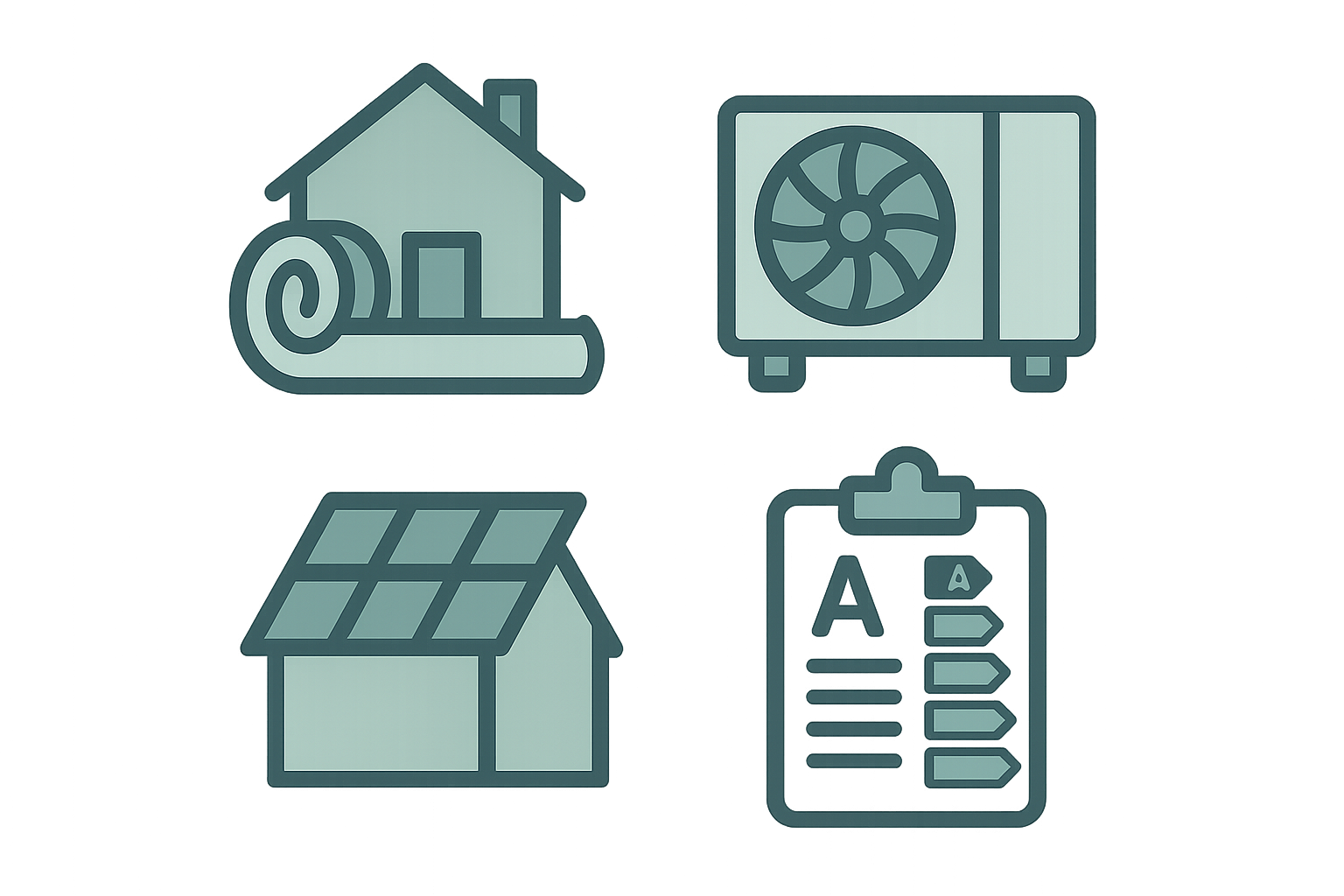

Deansgrange Semi-D — From BER F to A3
How much can a 1968 semi-detached house improve its BER rating after a retrofit? A 1968 semi-detached house leapt four BER bands after a full fabric-first retrofit, cutting annual heating spend by roughly one-third. How long did the retrofit works take? Works ran in one season; grants were handled through our partner Electric Ireland SuperHomes, so the homeowner paid only the net figure on the invoice.
No-Surprise Pricing
We issue a fixed-price proposal only after the heat-loss survey. Your SEAI grant appears as a line-item deduction, so the figure you sign is the figure you pay.
How Long Does It Take?
Most projects complete inside a single season on site. What happens during the early phase of the project? Fabric upgrades dominate the early phase; systems and commissioning follow; airtightness test and BER certify the finish.

Frequently Asked Questions
How much does a full deep retrofit actually cost?
A “whole-house” upgrade in Ireland now runs somewhere between €125,000 and €200,000 before grants, depending on size, layout, insulation depth and extras such as solar PV. A mid-range three-bed semi in South Dublin typically lands in the middle of that band. Final price is fixed only after a heat-loss survey.
How much of that can the SEAI cover?
If you use the One-Stop-Shop pathway, grant lines for insulation, heat pump, ventilation and solar are deducted up-front on your invoice, so you borrow or pay only the net figure. Individual grants are also available for a staged approach, and the fully-funded Warmer Homes Scheme covers 100 % for qualifying social-welfare recipients.
How long will the works keep builders on site?
A typical deep retrofit on a three-bed semi takes about eight to twelve weeks on site, once materials and trades are booked. Larger detached homes or architect-led heritage jobs can stretch to the four-month mark.
Do I have to move out?
Most homeowners stay put for all but the messiest phases; Electric Ireland SuperHomes say nine out of ten clients remain in the house throughout. Expect a few days of heavy disruption during floor insulation or internal dry-lining. External insulation and heat-pump installs are far less intrusive.
Do I need planning permission?
Rear, side and roof works are usually exempt, but external insulation on the main front façade or any protected structure needs a quick Section 57 sign-off from DLRCoCo. We flag this during survey and handle paperwork if it applies.
When will I start seeing savings?
Case-study data and SEAI modelling show 25 – 35 % lower heating bills in the first year after a deep retrofit, with comfort improved immediately. Payback accelerates when energy prices rise—or if you export excess solar back to the grid.
How long does grant approval take?
The One-Stop-Shop route typically approves within 3–6 weeks after your technical assessment, subject to SEAI’s monthly quota. We submit all documents and chase approvals on your behalf.
What is a deep retrofit and how does it differ from standard renovations?
A deep retrofit is a comprehensive upgrade to a home’s energy efficiency, including insulation, heating, ventilation, and airtightness, unlike standard renovations which focus mainly on aesthetics.
Which homes are suitable for a deep retrofit in Dublin?
Most detached, semi-detached, or terraced homes built before 2000 are ideal candidates, particularly if they have poor insulation or high energy costs.
Can a deep retrofit improve my home’s energy rating?
Yes. Deep retrofits significantly boost energy ratings (BER), reduce energy bills, and create a more comfortable living environment.
How long does a house deep retrofit usually take?
Depending on the property size and scope, retrofits typically take 6–12 weeks from initial assessment to project completion.
What services do deep retrofit contractors in Dublin provide?
Deep retrofit contractors in Dublin offer comprehensive home energy upgrades, including insulation, airtightness, and heating system improvements. VS Builders in Dublin specialises in deep retrofits that maximise energy savings and comfort.
Who are the deep retrofit insulation installers in Dublin?
Deep retrofit insulation installers in Dublin fit high-performance insulation materials to improve thermal efficiency. VS Builders in Dublin ensures quality installation for durable energy savings.
Can energy-efficient retrofit providers in Dublin lower energy bills?
Energy-efficient retrofit providers in Dublin upgrade insulation and ventilation to reduce energy consumption and heating costs. VS Builders in Dublin specialises in delivering effective energy retrofit solutions.
Why choose sustainable home retrofit companies in Dublin?
Sustainable home retrofit companies in Dublin focus on eco-friendly materials and energy-saving technologies. VS Builders in Dublin builds retrofits that reduce environmental impact and improve comfort.
How do energy retrofit companies in Dublin improve homes?
Energy retrofit companies in Dublin improve thermal efficiency through wall and roof insulation, window replacement, and ventilation upgrades. VS Builders in Dublin delivers tailored energy retrofit solutions.